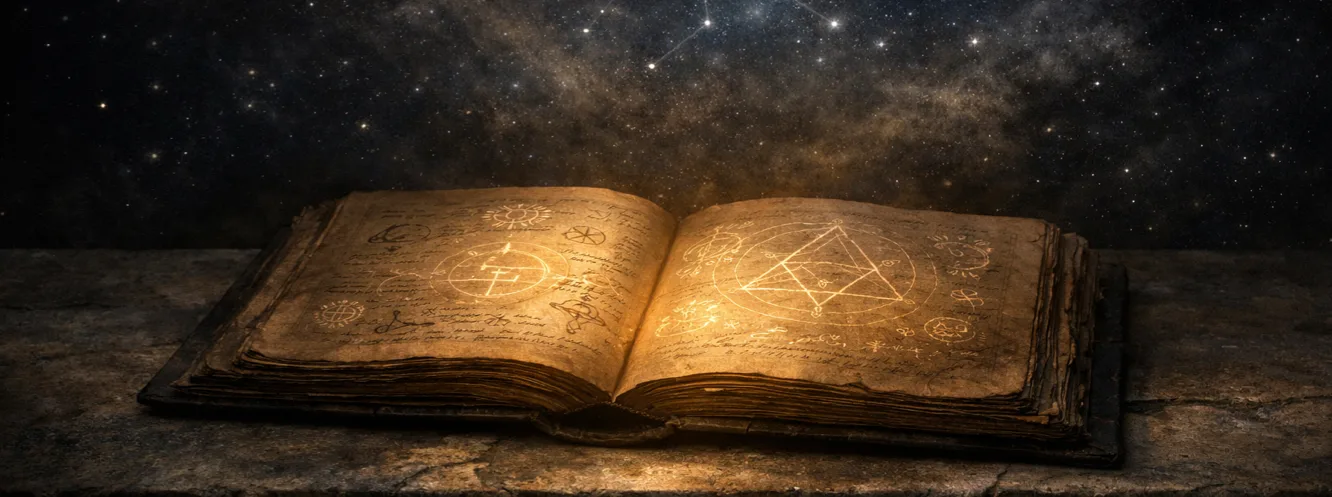
he Book of Aquarius is a modern anonymous manuscript that explores the idea that true alchemy is real, natural, and historically misunderstood. The author argues that ancient alchemists were not merely philosophers or symbolic mystics, but practical observers of nature who worked with organic processes such as fermentation, decay, purification, and regeneration.
At its core, the book challenges the modern assumption that alchemy was either superstition or purely psychological symbolism. Instead, it claims that genuine alchemical knowledge was deliberately hidden through coded language, metaphors, and allegory—both to protect it from misuse and to ensure it reached only those prepared to understand it.
A central theme of the book is the rejection of modern laboratory chemistry as the path to alchemy. The author emphasizes that true alchemy does not rely on toxic substances or industrial methods, but on natural cycles, patience, and alignment with nature’s own intelligence. According to the text, the Philosopher’s Stone is not a myth of instant gold-making, but a living, transformative substance developed through long-term natural processes.
he book also connects alchemy to broader philosophical ideas, suggesting that material transformation and inner transformation are linked. While it avoids explicit spiritual instruction, it implies that awareness, discipline, and perception play a role in understanding alchemical work.
Importantly, the Book of Aquarius does not provide clear instructions, formulas, or reproducible experiments. Instead, it functions as a provocation—encouraging readers to question historical narratives, study classical alchemical texts more deeply, and reconsider humanity’s lost relationship with nature.
Rather than offering final answers, the book positions itself as a gateway: a starting point for inquiry into alchemy, hermetic philosophy, and the hidden traditions of the past.